Trees bring height, character and natural interest to a garden, but they also require appropriate care as they mature. Dead branches, weak unions, storm damage and excessive growth can all create avoidable hazards if they are not identified and managed correctly.
Professional tree surgery improves garden safety by assessing the condition of each tree and carrying out work that responds to genuine concerns. For property owners in Hayling Island, Hampshire, this can help keep trees manageable while preserving their health, structure and contribution to the garden.
The Role of Tree Surgery in Maintaining a Safer Garden
Effective tree surgery begins with inspection rather than cutting. A tree surgeon considers the species, age, condition, location and growth pattern of the tree before recommending any work.
This matters because apparently similar problems can require very different solutions. A low branch may only need shortening, while a damaged limb with a weak attachment may require removal. Treating the cause of the concern helps produce a safer and more appropriate result.
Removing Dead or Damaged Branches
Dead branches no longer have living tissue supplying them with moisture and nutrients. As the wood dries and deteriorates, its structural strength may decline. Damaged branches can present a similar concern, particularly when they are split, hanging or only partially attached.
Professional deadwood removal targets branches that have died or become unsuitable to retain. This is especially important where growth extends above:
- Patios and seating areas
- Garden paths and entrances
- Driveways and parking spaces
- Lawns used for recreation
- Sheds and other garden structures
Removing compromised branches reduces the likelihood of them falling unexpectedly and allows the tree’s remaining structure to be inspected more clearly.
Managing Overextended Growth
Healthy branches can still become problematic when they grow too far over frequently used areas. Long limbs may become heavily weighted at their tips, while low branches can obstruct paths, driveways or garden access.
Selective pruning can reduce or redirect this growth without removing more of the crown than necessary. The aim is to create suitable clearance while retaining a balanced, natural shape.
Poorly positioned cuts or excessive pruning can weaken a tree and encourage dense regrowth. Professional techniques are therefore important when managing branch length and clearance.
Correcting an Unbalanced Crown
A tree may develop an uneven crown because of competition for light, previous pruning, storm damage or the loss of a major branch. This does not automatically make it unsafe, but substantial imbalance can place additional loading on particular limbs and unions.
Crown reduction or careful reshaping may be appropriate where the canopy has become too large, one-sided or difficult to manage. The work should be distributed across the crown and matched to the tree’s ability to tolerate pruning.
A well-planned reduction retains suitable growth points and avoids leaving large, unnecessary wounds.
Identifying Weak Branch Unions
Some structural concerns are not immediately obvious from ground level. Closely formed stems, included bark, cavities and splits can weaken the connection between branches or between major stems.
A professional assessment can identify visible warning signs and determine whether pruning, weight reduction or another form of management is suitable. Early intervention may reduce strain on a vulnerable section before further movement occurs.
Not every fork, cavity or unusual feature means that a tree is dangerous. Accurate assessment prevents unnecessary work while ensuring that genuine defects receive attention.
Responding to Storm Damage
Strong winds can break branches, twist sections of the crown or leave limbs suspended within nearby growth. A tree may remain standing while still containing damaged branches that are difficult to see from the ground.
Following severe weather, warning signs can include:
- Freshly broken or hanging branches
- New splits in limbs or main stems
- A sudden lean or movement at ground level
- Exposed or disturbed roots
- Branches resting against structures
- A noticeable change in the shape of the crown
Damaged trees should be assessed from a safe position. Attempting to pull down suspended branches or cut wood under tension can create further risk.
Keeping Hedges and Boundary Growth Manageable
Overgrown hedges and boundary trees can narrow paths, obstruct entrances and reduce visibility within the garden. Dense growth may also conceal damaged fencing, uneven ground or other features that require attention.
Professional hedge cutting and pruning can restore useful clearance while maintaining an appropriate shape. Regular management is generally more effective than allowing growth to become excessively wide or tall before addressing it.
Removing Unsafe or Unsuitable Trees
Tree removal is not always necessary when pruning can manage the concern successfully. However, felling may be the safest option when a tree is severely damaged, structurally unstable, extensively decayed or unsuitable for its location.
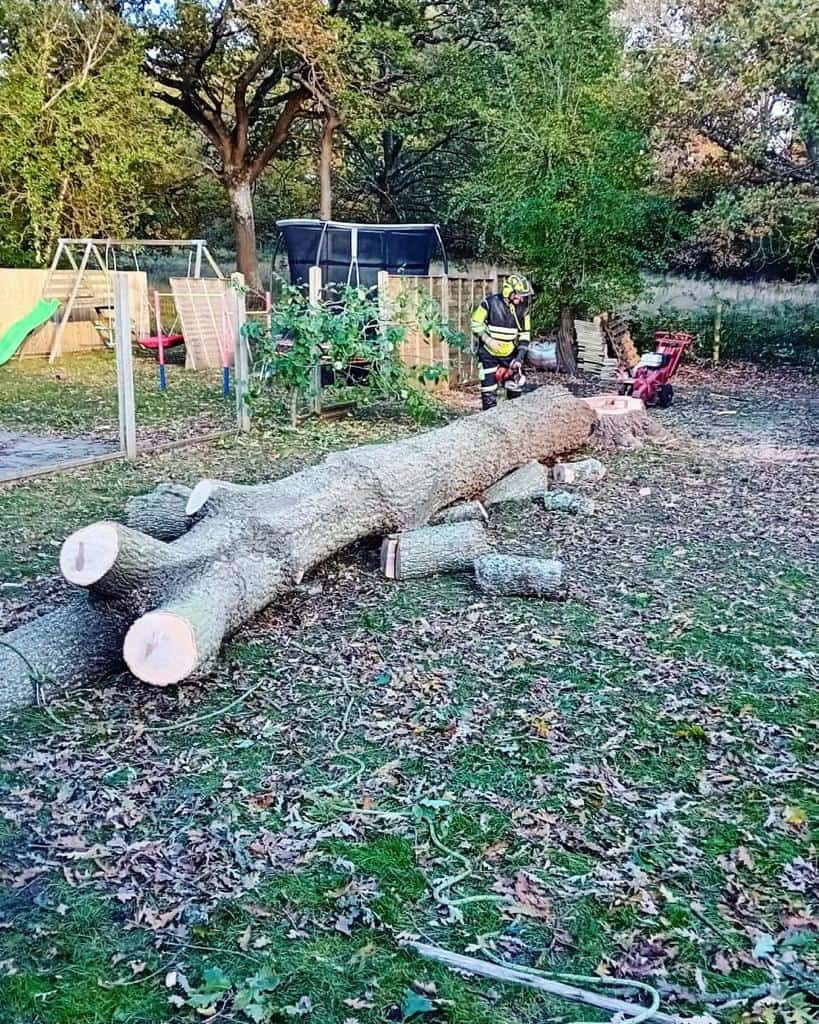
Where there is limited space to fell a tree in one piece, sectional dismantling allows it to be removed in controlled sections. This approach is often used when the tree is close to buildings, boundaries or established garden features.
A professional evaluation helps distinguish between a tree that can be retained through appropriate management and one that requires removal.
Dealing With Remaining Tree Stumps
After felling, an exposed stump can create an uneven obstruction within a lawn, path or regularly used part of the garden. Grass and low vegetation may gradually hide it, increasing the chance of someone tripping.
Stump grinding reduces the remaining wood below ground level and allows the area to be prepared for a suitable new use. It can also make mowing and general garden maintenance easier.
Why Regular Tree Inspections Matter
Trees naturally change as they grow and respond to weather, pruning and their surroundings. A branch that is currently sound may later become damaged, while small areas of decay or movement can develop gradually.
Periodic professional inspections are particularly valuable for mature trees, trees above frequently used spaces and specimens that have recently been affected by severe weather. Identifying changes early often allows work to be more targeted and proportionate.
Conclusion
Professional tree surgery can improve garden safety by removing deadwood, managing overextended branches, correcting unsuitable growth and identifying structural concerns before they become more serious. The most effective approach is based on careful assessment and only carrying out work that is appropriate for the tree.
LM Tree Surgery Hayling Island provides professional tree care in Hayling Island, Hampshire. If you are concerned about damaged branches, overgrown trees or a change in a tree’s condition, contact our team to arrange an assessment and discuss the most suitable next step.
Call us on: 023 8235 2063
Click here to find out more about LM Tree Surgery Hayling Island
Click here to complete our contact form and see how we can help with your tree needs.