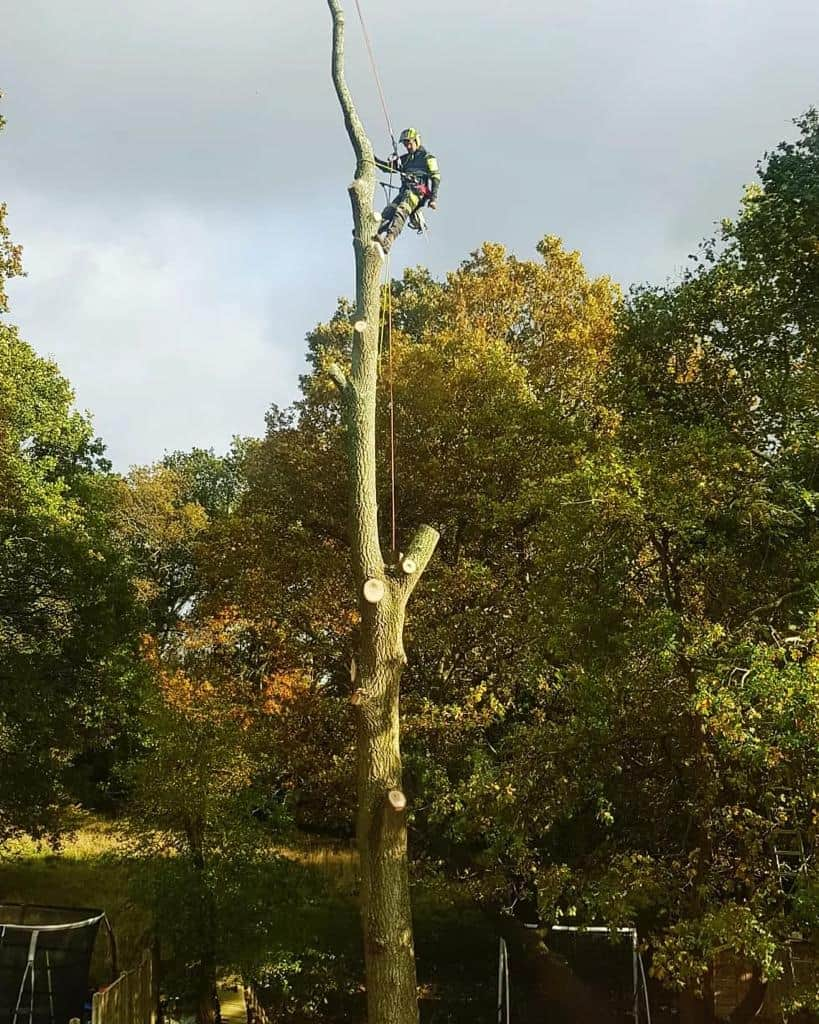
Removing a tree is not always as simple as cutting through the trunk and allowing it to fall. Trees growing close to houses, fences, sheds or other obstacles often require a carefully planned approach to prevent damage and maintain safety. Diseased, storm-damaged or unusually shaped trees can present additional challenges, making professional tree felling an important consideration for property owners.
In Hayling Island, Hampshire, professional arborists assess each tree individually to determine the most appropriate removal method. LM Tree Surgery Hayling Island provides tree care services designed to manage difficult removals through careful planning, suitable equipment and controlled working practices.
Why Are Some Trees More Difficult to Remove?
The complexity of tree felling depends on several factors, including the tree’s size, condition, location and surrounding environment. A healthy tree in an open space may be suitable for directional felling, while one positioned close to buildings or garden structures may need to be dismantled in sections.
Limited Space Around the Tree
Trees in residential gardens often grow near fences, walls, conservatories and neighbouring structures. When there is insufficient clear space for the whole tree to fall safely, bringing it down in one piece may not be appropriate.
In these situations, an arborist may use sectional dismantling, removing branches and portions of the trunk progressively. This allows the tree to be taken down in manageable sections while reducing the risk of damaging nearby features.
Diseased or Structurally Weak Trees
A tree affected by decay, extensive deadwood or structural damage may behave unpredictably during removal. Weak branches can break unexpectedly, while internal decay may affect the stability of the trunk.
Before beginning work, an arborist assesses the tree’s condition and identifies potential weaknesses. This information helps determine how the tree should be handled and whether additional precautions or specialist equipment are required.
Overhanging Branches and Nearby Obstacles
Large branches extending over roofs, garden buildings or access routes can make removal more complicated. Cutting these branches without a clear plan may cause them to swing, fall or damage the surrounding area.
Professional arborists consider the direction of each cut, the weight of the branch and the available space. Where appropriate, specialist rigging techniques can be used to lower sections in a controlled manner rather than allowing them to fall freely.
How Professional Arborists Plan Difficult Tree Removals
Careful preparation is essential for a successful tree felling project. Before work starts, the arborist evaluates the site and establishes a suitable method based on the tree’s condition and surroundings.
Initial Tree and Site Assessment
The first stage involves examining the tree’s height, structure, trunk condition, branch distribution and visible root area. The arborist also considers nearby buildings, fences, access routes and other features that may affect the work.
This assessment helps identify potential hazards and establish whether the tree can be felled in one controlled movement or needs to be dismantled in sections.
It may also reveal that complete removal is unnecessary. In some circumstances, pruning or crown reduction can address the original concern while allowing the tree to remain in place.
Choosing the Right Removal Method
Directional felling may be suitable when there is sufficient unobstructed space and the tree’s condition allows it. The arborist plans the direction of fall and uses appropriate cutting techniques to guide the tree safely.
Where space is restricted, sectional dismantling is often more suitable. The tree is gradually reduced from the upper sections downwards, with branches and trunk sections removed individually.
The chosen method depends on the specific site conditions rather than a single approach being suitable for every tree.
Using Specialist Equipment and Rigging
Difficult removals may require climbing equipment, elevated work platforms or rigging systems, depending on access and the tree’s condition.
Rigging allows selected branches or trunk sections to be lowered in a controlled way when dropping them directly would create unnecessary risks. Suitable equipment also helps arborists manage heavy materials and work around obstacles.
The equipment and techniques used should be matched to the tree, the site and the complexity of the removal.
How Tree Surgeons Protect Surrounding Property
Protecting the surrounding area is a key consideration during difficult tree removals. Before work begins, the team identifies the working zone and determines which areas need to remain clear.
Garden furniture and movable objects may need to be relocated, while access routes are kept clear for the movement of equipment and timber. Particular attention is given to structures beneath overhanging branches and areas where falling material could cause damage.
Where branches must be lowered, the removal sequence is planned to maintain control throughout the process. These precautions help minimise avoidable disruption and keep the work organised.
What Happens After the Tree Has Been Felled?
Once the tree has been removed, the remaining branches and timber can be cut into manageable sections and cleared according to the agreed arrangements.
The stump may be left in place or treated separately. Stump grinding is often suitable when the aim is to reduce the stump below ground level, while more extensive removal may be appropriate if the area is being prepared for particular landscaping or groundworks.
Discussing stump treatment and site clearance before the work begins helps ensure the finished result meets your needs.
When Should You Consider Professional Tree Felling?
Tree felling may be appropriate when a tree is severely damaged, structurally unstable, extensively diseased or unsuitable for its location. A tree that has suffered storm damage or developed significant decay should be assessed promptly, especially if it presents a potential danger to people or property.
However, removal is not always the only solution. An experienced arborist can explain whether the problem can be managed through suitable tree surgery or whether felling is the more appropriate option.
For property owners in Hayling Island, Hampshire, obtaining professional advice helps ensure that decisions are based on the tree’s actual condition and the requirements of the site.
Conclusion
Difficult tree removals require more than cutting techniques alone. Careful assessment, appropriate removal methods, specialist equipment and a clear plan all help arborists manage trees growing in restricted spaces or near vulnerable structures.
LM Tree Surgery Hayling Island provides professional tree care services for property owners in Hayling Island, Hampshire. If you have a damaged, unstable or poorly positioned tree that may need removing, get in touch to discuss your requirements and arrange a professional assessment.
Call us on: 023 8235 2063
Click here to find out more about LM Tree Surgery Hayling Island
Click here to complete our contact form and see how we can help with your tree needs.